
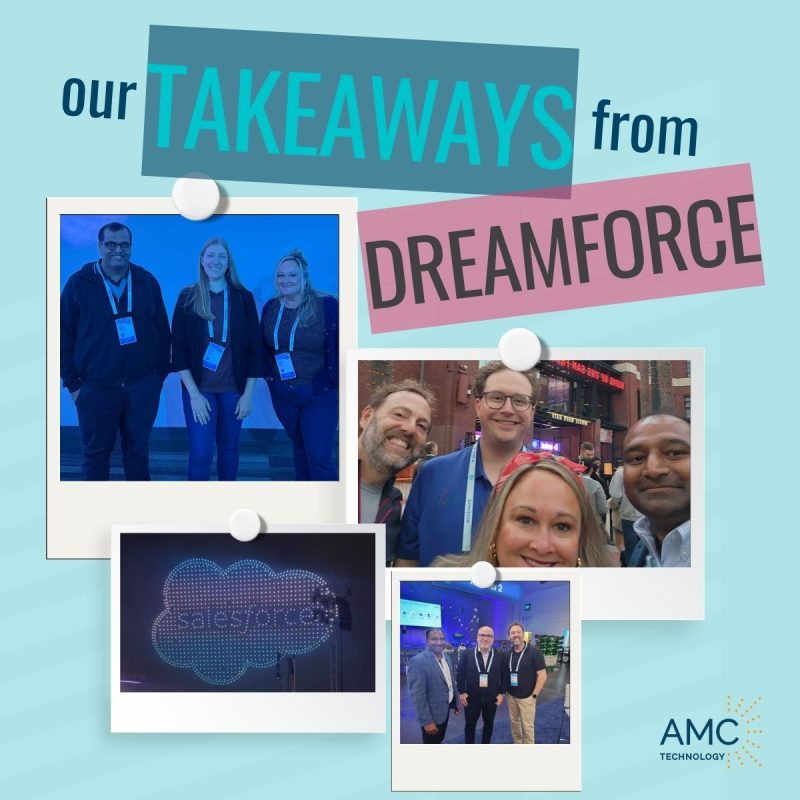
Dreamforce 2026 had one big message: you shouldn’t have to log in to Salesforce to get work done. Here’s what stood out to the AMC Technology team, and what it means if you run a contact center on Salesforce.
1. AIforce launches, and Salesforce comes to you
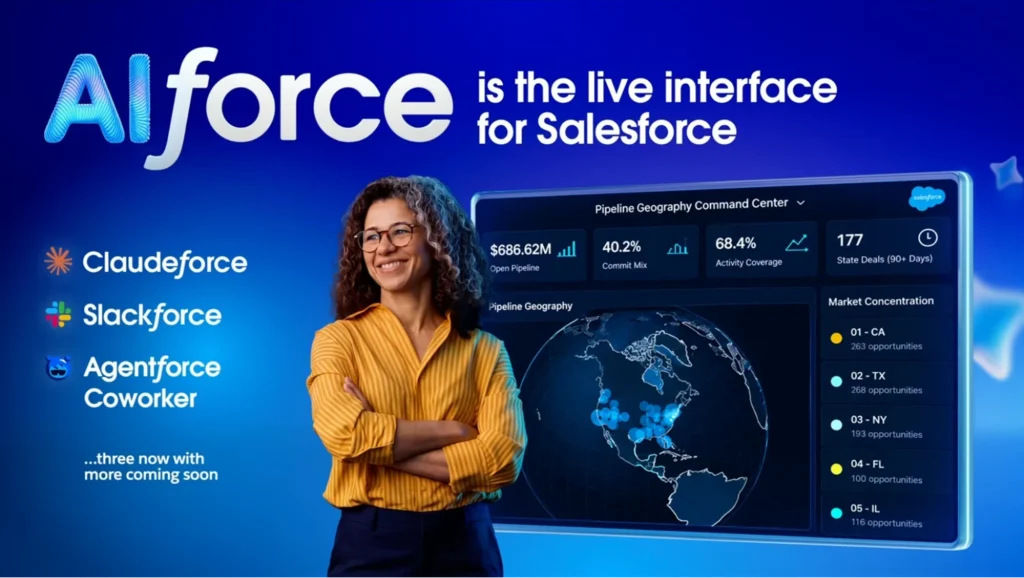
AIforce was the headline for most people at Dreamforce this year. Marc Benioff introduced it on the main stage: “Say hello to AIforce, the world’s leading AI models connected to the world’s number one AI CRM.”
Why it matters: Salesforce no longer expects you to come to the Salesforce interface. It comes to you, in Claude, Slack, Lightning or wherever you already work. AIforce lets AI agents anywhere reason and take action across the data, logic and workflows where your company knowledge lives. You can update records, trigger workflows and get answers without opening the Salesforce UI.
2. Software isn’t over. Busywork is.
Plenty of people believe AI is ending SaaS. Benioff pushed back: “It’s not the end of software. It’s the end of software that makes humans do all the work.”
Several other CEOs on the keynote stage agreed. NVIDIA’s Jensen Huang was the bluntest: “The end of software is nonsense… this is going to be a layer on top of software.”
For you, that means your systems of record aren’t going anywhere. What changes is how much clicking, copying and updating your people do by hand.
3. Claudeforce
The Anthropic partnership that’s been building since summer moved into open beta at Dreamforce. Claudeforce puts Salesforce inside Claude through an MCP server, with 37 prebuilt sales skills. Any org can turn it on today from AppExchange.
On stage, Salesforce’s Patrick Stokes built a custom Salesforce interface entirely through a conversation in Claude. Salesforce also led with trust. In Benioff’s words: “Your data is your data. It does not go in the models.”
4. Agentforce adoption is slower than Salesforce thinks
As a Salesforce consulting and ISV partner, AMC Technology sat in on several sessions about finding the right AI use cases. The clearest takeaway: most contact center leaders are still in research mode. They came looking for ideas from peers, not ready-made rollout plans.
If that sounds like you, you’re not behind. You’re in the majority. The fastest way forward is to pick one specific use case, prove it with a small pilot, then expand.
5. AI is probabilistic. Your business isn’t.
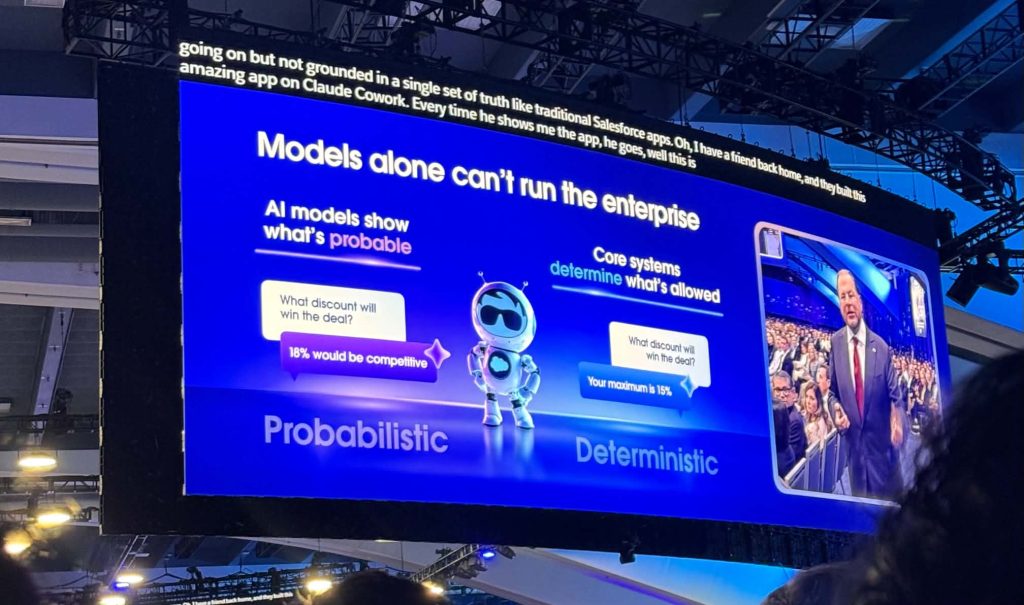
Benioff spent a good part of the keynote on one idea: AI models are probabilistic, but your business data and workflows are deterministic. “Models alone are very probabilistic,” he said. “They kind of know what’s going on, but they’re not grounded in a single set of truth like your traditional Salesforce apps.”
His question for the room: “How can you bring that probabilistic world, the AI world, and the deterministic world together?” Siemens CEO Roland Busch put the stakes plainly: “Hallucination does not really work on the shop floor.”
Salesforce’s answer is grounding. Agents reason flexibly, then act through defined, trusted actions tied to your data, permissions and business rules. In one demo, an agent handled supplier onboarding by “executing against the same set of trusted actions every single time.”
For contact centers, this is the whole game. AI can draft a reply, but a refund, a case update or an account change has to be right every time. Look for AI that reasons flexibly and executes predictably.
6. Was any of it actually new?
Honestly, not much. AIforce is mostly a new name for things that already existed. Salesforce grouped four pieces under one brand:
- Claudeforce: Salesforce inside Claude through an MCP server, with 37 prebuilt sales skills
- Slackforce: create and update records from Slack
- Agentforce Coworker: an AI assistant inside Lightning
- Headless Toolkit: MCP servers, APIs and plugins that expose the Salesforce platform
Teams have already been connecting Salesforce to Claude through MCP servers to query, update and automate. AIforce doesn’t unlock anything they couldn’t already do. It puts a Salesforce label on that pattern and makes it the official way in. Even Salesforce Ben called the announcement “more piecemeal” than the Agentforce launch two years ago. The underlying message: Salesforce doesn’t want to become just a database behind someone else’s AI, so it’s making sure it owns the connection.
That said, the official version does differ from a do-it-yourself setup:
- Support: it’s built and backed by Salesforce, not a community connector
- Permissions: it follows your existing Salesforce permissions
- Ready-made skills: 37 prebuilt skills mean less setup
- Data policy: zero data retention, and your data doesn’t train the models
For larger companies where security and IT review every tool, that can decide whether AI gets used at all. It’s not a technical leap, but it may speed up adoption.
